Here Steve Jobs talks about focussing on your customers rather than your products. Create something that customers will want rather than trying to sell them something that you have. This core idea has some similarities to the idea of communicating from the inside out...
Kind of.
While Simon Sinek suggests that Apple's core belief is in doing things differently here we see it is more refined. Apple do things differently by not only communicating backwards, but also by thinking backwards. Rather than telling people what they want they ask what customers are likely to want.
What follows is a combination of my notes, memory, and opinions from A Tonic 2011 - Some things may be inaccurate, misleading, or even missing - please feel free to point out any errors out or add your own voice in the comments section below. Critically this is a reduced version of what was presented. Any of Johannes unique content has been presented in brief only to acknowledge the time spent preparing the material and the value that can be obtained from future presentations.
Some points that were covered but are not covered here include:
The importance of story Detailed coverage and examples of how packaging signals value The unexpected consequences of winning awards
The ugly truth about brides Removing Ugliness
Johannes full list and definition of his style defining terms Detail around the types of clients you will encounter in a recessionary environment and how to market to them
Johannes solution to the architect/photographer search (what's important in photographers/architects)
Detail of how to recover from a setback like an earthquake Photographic examples used to illustrate points
If any of the above are likely to be helpful you may like to attend a future event or hire him as a speaker for an event you may be planning.
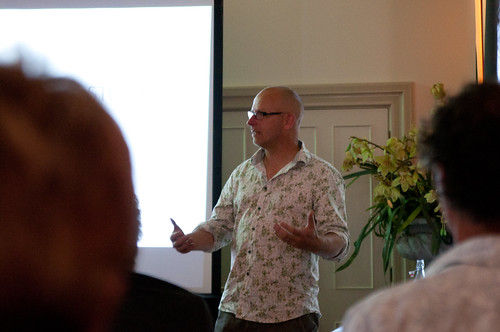
Johannes van Kan talk was media rich and heavily influenced by the impact that the Christchurch earthquake had on his business. While he stopped short of wishing an earthquake on everyone in the room he did suggest that it was an experience that could be beneficial to consider when planning your business. That being said things started on a lighter note with a wine tasting and viewing.
We Buy the Bottle, Not the Wine
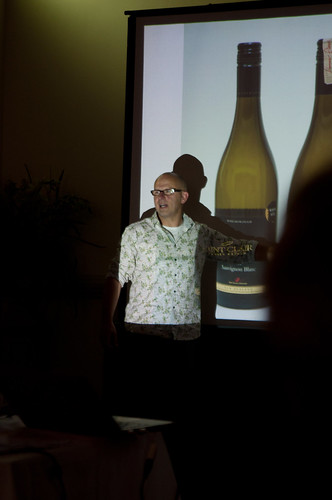
The talk began with the room being split into two groups. One group were taken outside and shown 3 bottles of wine. the other group stayed inside and were given three glasses of wine. Both groups rated the expected price of each wine. The bottle group made their judgements solely based on the way the bottles looked. The wine glass group made their judgements based on the taste of the 3 wines. Differences in the expected prices unveiled some important lessons.
Bottle Viewers Gave Higher Prices than Wine Tasters
This is important because it shows the difference between having packaging and not having packaging. In this case any packaging was better than no packaging.
Only Bottle Viewers Could Reliably Differentiate the Wines
There are a few important points here. First is the fact that the packaging is more effective at signally how much something should be worth than the product itself. Second is the fact that most people were unable to tell the difference between the expensive and cheap wine. Why not? Participants were not experts - without knowing how to tell if the wine was good or bad people were unable to. This is directly relevant to photography. Most of our clients don't know what separates a good photo from a great photo. If we are sellling great photos we need to tell them (or, somewhat more deceptively, if we're selling good photos we can tell them our photos are great and they will believe us).
The take home message. Beware of the way you present yourself. What is your story? This, rather than your images, is what people will buy.
Awards - Are They Worthwhile?
Tying in nicely to this are the idea of awards. While awards can be expensive to enter they can also be beneficial. They bring clients a sense of reassurance in your quality and can also provide media exposure. However in order for them to be beneficial you must tell people about them, you must put them on your wine label.
Johannes also covered the unexpected consequences of winning an award and what this can mean for your business.
What is Beauty?
Similar to David's distinction between pretty images and strong images Johannes made the distinction between pretty images and beautiful images. Once again Johannes pointed out that a beautiful image did not need to contain a pretty subject (one could even go so far as to say it could contain an ugly subject) because beautiful and pretty were not the same thing. Johannes pointed to specific photographic examples to illustrate and clarify his point.
What is Ugliness?
Like beauty Johannes believes ugliness is not physical. He gave specific examples of where he believes it comes from and how you can address it when shooting.
Developing Your Own Style
While Style is an important selling point for any photography defining what style is can be difficult. While it is often spoken of as the way a photographer chooses to take photographs - covering everything from framing to equipment choices - Johannes, inspired by a talk by architect Daniel Libeskind, has come up with a few ideas opposing statements that may help pin this idea down. These included, but were not limited to
Emotion vs. Cool
Grace vs. Fashion
Love vs. Lust
Gen2.0 vs. Experience
While a few of these overlap the concepts that you value will influence the way you take photos and this will be part of what makes up your photographic style.
The Recession
The Environment
The recession has amplified an environment that had always existed. It consists of people who buy services (Clients) and the types of services (Essentials, Treats, Postponables, Expendables). For most people photography does not fall into the essentials category so it is important to understand how clients might classify photography in order to understand where we should focus our efforts.
The way to survive
The good news is that the recession isn't all bad news. Tough times inspire creativity, efficiency, and forward momentum while decreasing competition. The trick is going to be in avoiding the temptation to cut spending on advertising (thus reducing exposure, awareness, and business) or to enter a price war in order to win business that may end up being unprofitable or detrimental to your brand image and prevent recovery.
Remember Your Clients - Another lesson from Architects and the return of the wine Bottle
As previously mentioned Johannes business was hit hard by the earthquake. Their building was torn down and they needed to rebuild. This brought on the need for an architect which brought on the search. During this search Johannes was struck by the similarity between hiring an architect and hiring a photographer. Both professions are of an artistic nature, both involve a number of clues to who to choose and both sets of professionals are usually hired by people who know little about the industry. He outline the types of architects they met and the reasons why they did and didn't choose them. Ultimately this provides a great exercise for anyone to indulge in. Find something of an artistic nature that you know little about and attempt to hire the best candidate. What do you prioritise and why?
Ted's Words of Wisdom
Johannes made mention of videos from Ted a number of times and stressed the importance of their messages. They are included below for your viewing and listening pleasure. The Final tips and thoughts - things that didn't fit elsewhere - are included in the next section.
Be up front about pricing
People look for prices when they look for a photographer. Don't hide yours away, be open and honest about them. They form part of your wine bottle.
For a while now Nikon have been advertising their cameras by telling us who those cameras are. Now Nikon are telling us who Nikon are. This seems to be following the idea of communicating from the inside out - if you can engage people on an emotional level they will buy from you for who you are rather than what you are selling them.
It will be interesting to see if this continues and if it gains them any ground. While many point to Apple as the best example of this approach working the fact that it worked for Apple doesn't mean it will work for anyone. Certainly this video isn't up to the standard that we see from Apple which may lead to them falling short. Furthermore it worked for Apple because people believed them. Will people believe Nikon?
How do you explain when things don't go as we assume?
How do you explain when others seem to achieve things that defy all of the assumptions?
eg. Why is apple so inivative?
They're just a computer company, they're just the same as everyone else.
They have the same access to the same talent the same agencies, the same consultants, the same media.
why did Martin Luther King lead the civil rights movement?
Why did the Wright brothers figure out flight when other teams were better qualified and better funded?
There's something else at play here.
As it turns out there's a pattern.
all the great and inspriing leaders think act an dcommunicate in the excat same way.
It's the complete opposite to everyone else. They communicate from the inside out.
It is the world's simplest idea and it is called the golden circle.
Why
How
What
What
Everyone knows what they do
How
Many know how they do it
Why
Few know why they do it. Why does your organisation exist? What do you believe in? Why should anyone care?
People don't buy what you do they buy why you do it.
The goal is not to sell to people who need what you have but to sell to people who believe what you believe. This breeds trust. This breeds loyalty.
What is about rational decisions.
How and why are where people make decisions based on feeling or gut instinct.
Feelings cannot be expressed in language whihc may explain why it can be hard to describe gut decisions.
The law of diffusion of innovation
- 2.5% innovators
- 13.5% early adopters
- 34% early majority
- 34% late majority
- 16% the rest are laggards
Early adopters buy what they buy because of what THEY believe
People who tell us what they have
- Tivo
- Langley
People who tell us what they believe
- Apple
- Martin Luther King (I have a dream, not I have a movement, I believe, not I have.)
- The Wright Brothers