Showing posts with label Business Tips. Show all posts
Showing posts with label Business Tips. Show all posts
Thursday, October 11, 2012
Get Indexed by Google Quickly
In this video Matt Cutts points out a feature of Google Webmaster Tools that essentially allows you to manually update Google's record of your webpage. The fetch as google bot function used to simply show you how google would see your page but now it can be used to refresh, or create, Google's record of a page on your website. For established websites this is very useful if some important information needs to be changed, a common example being a change in the price of a product or service. For new websites this should enable webmasters to get their content indexed more quickly than waiting for a google bot to crawl their content naturally. Interestingly Matt also points out that this feature gives you the option of crawling the linked content on that page as well. This is an excellent way for new sites to get into the index especially if a main navigation page is submitted to the fetch as google bot feature.


Tuesday, March 20, 2012
Google's 5 mistakes in SEO
1) Failure to provide value to the client
A website that has great SEO but no real value to it searchers will not reliably click through or refer friends.
2) A segmented approach to SEO
Focus on optimising your site through the whole customer experience. Align your marketing message with your SEO strategy.
3) Time Consuming Work Arounds
Stay up to date with current best practices to avoid wasting effort. One example is flagging content in such a way that causes google's spiders to disregard it completely.
4) Getting caught in SEO trends
The most dangerous trend to get caught up in is chasing the search engines rather than users. Search engines try to emulate users. If you chase users you and the search engines will be working towards the same goal meaning algorithm changes should help rather than hurt you.
5) Slow iteration
Update your site continually to provide maximal optimisation
Do these:
1) Do something cool
2) Include relevant keywords in your copy
3) Be smart about title and meta description tags
4) Sign up for e-mail forwarding in webmaster tools (it will send you information about problems etc.)
5) Attract Buzz, often referred to as creating link bait
6) Stay fresh and relevant
Tuesday, February 7, 2012
Happiness and the importance of outliers
Skip to 9:00 for the most practical/applicable part of the video.
If you know everything about a person's external environment you can only predict 10% of their happiness
The absence of disease is not health
Happiness doesn't come from success, success can come from happiness.
When you are happy all business outcomes improve.
Wednesday, December 14, 2011
Pitching Your Ideas For Funding - UK Dragon's Den Tips
Make an Impression Quickly
Guidelines:
Appropriate dress - usually formal. If it's not formal have a good reason such as 'we wear these clothes to demonstrate that we will be there on the ground getting the work done.'
Visual Impact
Unintended Consequences:
raises expectations
Getting the wrong idea across
Practice Makes Perfect
Know your presentationKnow how your product works and practice your demonstration
Know your numbers
Know it all inside out and back to front. This will tie back to the first point, it will be part of making your first impression
Keep Your Nerve
Practice will help with this and, again, it will feed into helping you make a great first impression.Avoid Arrogance
Don't confuse confidence with arrogance.Don't try to replace knowledge with false bravado.
Be Passionate
This should come across in your attitude, your presentation, and your personal financial and time investment in the business. If you're not passionate about it, if you wouldn't invest in it, why should anyone else?Get Real
While Passion is good don't lose touch with reality. Passion alone will not sell a product. It must also be marketable, provide a point of difference, and be profitable.Be Honest
This is similar to getting real, in fact getting real is a subcomponent of this point. Answer everything and answer it honestly. Don't inflate numbers to make things look better than they are. This will have the opposite effect. In fact it is best to take this a step further. Don't just be honest about your business proposition, be honest about yourself. Let the real you shine through.
Tuesday, December 13, 2011
Pitching Your Ideas for Funding - Venture Capitalists
What is a VC looking for?
The single most important thing is YOU
Most pitches are 15-30 minutes if you're lucky.
In Reality you have far less time than this to make your first impression
What then do you need to convey?
- Integrity
- Passion
- Experience
- Knowledge (domain expertise, know your market and your area)
- Skills (in you and/or in your team)
- Leadership (especially when leading a team)
- Commitment
- Vision
- Realism
- Coachability (You must be prepared to listen and learn)
How deliver these and other messages?
All pitches are emotional.
At the start you have about 10 seconds to get people's attention.
Make sure you grab their emotional attention and keep the emotions positive.
Make things better, and better, and better until you reach your knockout punch at the end.
Things that will help your pitch:
- Logical Progression (don't skip steps)
- Link to things your audience will understand
- Validate your idea (sales, success, evidence that the world wants your product)
- Show a believable upside
Things that hurt
- Things that are untrue
- Things your audience doesn't understand
- Things that make the audience think for you
- Inconsistencies
- Basic errors including typos etc.
Presentation tips
- Keep the focus on YOU during a presentation. That is what they are interested in afterall
- Avoid bullet points, aim only for images
Include:
Company Logo
Business Overview
Management Team (highlight relevant experience and skills)
Market
Product
Business Model (how do you make money?)
Strategic relationships (helps with validation)
Competition and how you're different (all companies and products have competition, even if it's only the old way of doing things)
Barriers to Entry
Financial Overview
Use of Proceeds
Capital and Valuation (how much do you want?)
Thursday, November 17, 2011
If you can afford to hire yourself you're too cheap
In this video Bambi Cantrell explains why she thinks that you're too cheap if you can afford yourself.
She stresses the importance of acknowledging your own skill level and how price and professionalism can help to demonstrate your worth.
Wednesday, November 16, 2011
A Tonic For your Business - David Oliver
What Follows is a combination of my notes, memory, and opinions from A Tonic 2011 - Some things may be inaccurate, misleading, or even missing - please feel free to point out any errors out or add your own voice in the comments section below.
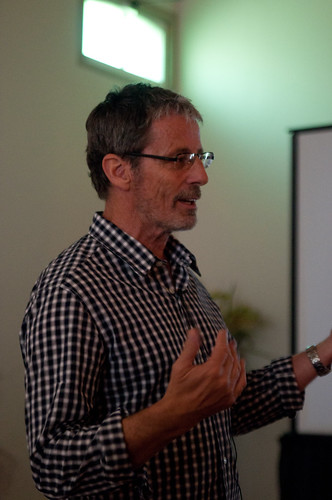
David Moore
Graham McCarter
Lewis Morely
He also talked about his own experience of working around other photographers and being open to the feedback that they provide. While he did mention feedback from mentors who he still seeks advice from one particular piece of feedback seemed to have stuck in his mind - a comment from an unnamed advertising photographer in a studio he used to work for:
"When are you going to show me a strong image?"
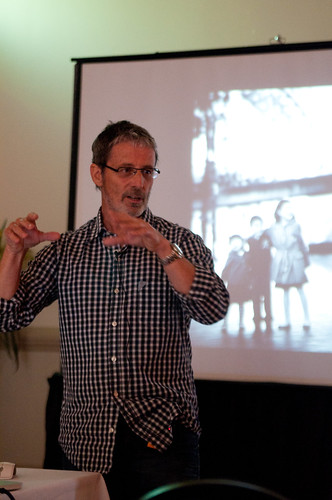
We are our images
Now, you might expect this to be fairly obvious to photographers who are employed by people to take photos or are paid for the photos that they take. However in a world full of marketing madness where style (spin) is often emphasised over substance (the product/images) it can be a surprisingly easy point to lose track of. In fact it has very important implications for us.
Strong images tell people a lot about our particular style. Importantly while clients may not neccesarily hire us to produce a strong image (they are more likely to hire us to produce nice or pretty images) strong images may be what brought them to us. importantly strong images can be ugly and identifying the difference between pretty images and strong images is an important exercise for any photographer. For me strong images have a power to create a strong emotion, desire, or drive within the viewer. Ideally a strong image will have this effect on any viewer, in some cases however it is necessary for the viewer to understand the context or story surrounding the image for this power to manifest. David gave an example of a wedding image which - in itself - was pretty but not powerful. However when paired with its backstory of extraordinary loss the picture came to show a form of strength/determination in the face of adversity that gave the image enormous emotional strength. Was this image strong? Not by itself - a point that he would revisit later.
Individual images can last a lifetime and keep bringing you work
Self explanatory :)
Charity projects can give us exposure
Charity projects raise awareness of causes and the photographers who shoot them. While you may not gain financially you do gain experience, understanding, and perspective.
Presentation matters
If we are our images it makes sense to present our images in the best way that we can. Presentation on quality product - such as fibre-based/fine-art papers with Ultra Chrome ink - ensures that the images will last and provides an opportunity for split price points with increased profits. In fact presentation on these sorts of products can allow an image to be placed in sunlight for 6 years (maybe more) with no visible degradation in colour quality. Lab (Resin Coated (RC)) prints on the other hand would be lucky to last 3 years in the same conditions. In the shade RC prints can be expected to last 20 years or so while Ultra Chrom prints should last 100 years or more. To get equivalent performance from an RC print it would need to be kept in an album. Finally beware of what you put in front of your images. Glass can give images a green cast while perspex should not.
We capture luck
Luck and a strong photograph
The Balmoral - One of David's strong images - almost didn't happen. It was taken during a family portrait session with a spare frame on the end of a roll of film. David turned around, saw what he liked, and took the shot. While a number of people have tried to replicate the shot they have not been able to - this is because the shot is the result of a combination of factors that occurred by chance rather than design. In particular the presence of the mist in the photo - an event that is very uncommon in that area. This photograph was a product of being in the right place, at the right time, with the right equipment. As such it is a strong argument for always having your camera with you.
Luck and an iconic image
Lewis Moorely took a nude photo of a prostitute - Christine Keeler - in the 1960s. The image was good but probably wouldn't have been strong enough to sell to your average punter on its own. However later it emerged that the prostitute's clients included KGB agents and a British minister. Lewis had the only nude shot and the image was printed everywhere. Through a little bit of luck the image had become iconic.
David's Keys To Survival
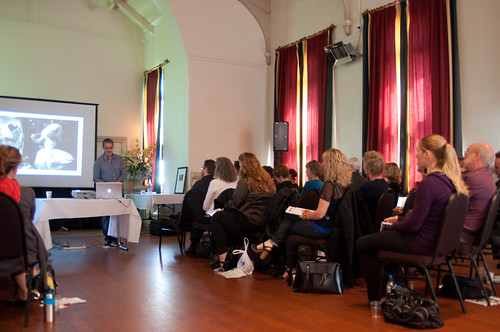
No pressure selling
David has avoided the advice of marketing gurus on the understanding that marketing gurus make money by selling ideas to photographers rather than selling photos to clients. If they have no experience doing what he does why should he listen to their advice? Rather than pressure clients into making purchases by threatening them with the deletion of files or sudden price spikes he leaves the clients along with printed 3x2 proofs and a pricelist. David then wanders off allowing them time to make their decision.
Focussing on quality products
David also focuses on quality products. Arguably this focus reduces the need for further salesmanship on his behalf as clients can have faith in the fact that if they purchase something it will be worth the money that they are spending on it. This even extends to the sales session - he provides prints on paper as projected images are of a reduced quality.
Focussing on what the client wants
David takes the time to understand what his clients want. He treats people as people rather than numbers being churned through a system. This makes people feel valued, ensures that they are happy with the work and leads into the next point.
Repeat Business and Referrals
All of this together has lead to repeat business and referrals.
Inspiration
Staying inspired is key. As photographers we are in a position where there is always more to be learnt - there will always be new things to look at and new ways of looking at them. This links back to the beginning - the benefit of looking back on the work of great photographers who have come before - but also links us to the present and the future. Look around you to see what other people are viewing and seeing. If you find a photograph that you like - buy it and frame it. It will become an investment - if it not a financial investment an investment in your continued inspiration.
Critically none of this has been tested scientifically. While he has received positive feedback from people who have implemented similar systems it is entirely possible that the change may be acting as something of a placebo. I implemented a change that I expect to work in such a way, therefore the change does work in such a way regardless of what the change actually is.
Final Tips and Thoughts
SunCalc
SunCalc is a web based app tied to google maps. It predicts the position of the sun and lays the information over a map of the area you intend to shoot in.
Wear a White shirt
This will provide a little bit of bounce and may give you some catch lights in your subject's eyes.
Avoid Flash
Flash kills faces.
Use your camera bag to secure your reflector
This provides an alternative to flash and can work quite well to fill in people's faces.
Film shooting was theatre
A key advantage of digital photography is the ability to take an endless number of shots with very little hassle. While this often leads to hell in the editing phase it has made also made the shoot itself less theatrical. Without the limitation of a roll or 2 of film there is no longer a need to pretend to adjust the lights in order to warm up a subject. While this does perhaps lead to a more honest version of photography does it also mean that something has been lost? Do we take less care in taking our images? Do our subjects feel that are getting less value through reduced fiddling?
Get the Film Look Back with Nik Software
David loves the look that film grain and papers gave photographs. Nik software and Silverefex allow him to bring that look with him in the digital era. If you're also a fan of the film look give them a go and let us know your thoughts.
Get the Film Look Back with Nik Software
David loves the look that film grain and papers gave photographs. Nik software and Silverefex allow him to bring that look with him in the digital era. If you're also a fan of the film look give them a go and let us know your thoughts.
A Tonic For Your Business- Johannes van Kan
What follows is a combination of my notes, memory, and opinions from A Tonic 2011 - Some things may be inaccurate, misleading, or even missing - please feel free to point out any errors out or add your own voice in the comments section below. Critically this is a reduced version of what was presented. Any of Johannes unique content has been presented in brief only to acknowledge the time spent preparing the material and the value that can be obtained from future presentations.
Some points that were covered but are not covered here include:
The importance of story
Detailed coverage and examples of how packaging signals value
The unexpected consequences of winning awards
Detailed coverage and examples of how packaging signals value
The unexpected consequences of winning awards
The ugly truth about brides
Removing Ugliness
Removing Ugliness
Johannes full list and definition of his style defining terms
Detail around the types of clients you will encounter in a recessionary environment and how to market to them
Detail around the types of clients you will encounter in a recessionary environment and how to market to them
Johannes solution to the architect/photographer search (what's important in photographers/architects)
Detail of how to recover from a setback like an earthquake
Photographic examples used to illustrate points
Photographic examples used to illustrate points
If any of the above are likely to be helpful you may like to attend a future event or hire him as a speaker for an event you may be planning.
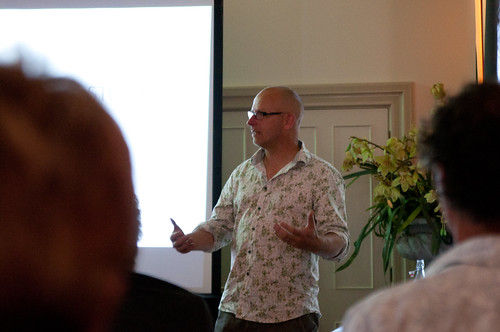
We Buy the Bottle, Not the Wine
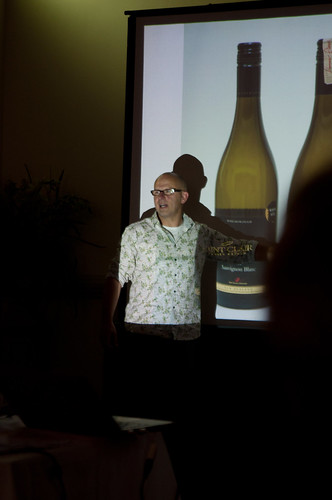
Bottle Viewers Gave Higher Prices than Wine Tasters
This is important because it shows the difference between having packaging and not having packaging. In this case any packaging was better than no packaging.
Only Bottle Viewers Could Reliably Differentiate the Wines
There are a few important points here. First is the fact that the packaging is more effective at signally how much something should be worth than the product itself. Second is the fact that most people were unable to tell the difference between the expensive and cheap wine. Why not? Participants were not experts - without knowing how to tell if the wine was good or bad people were unable to. This is directly relevant to photography. Most of our clients don't know what separates a good photo from a great photo. If we are sellling great photos we need to tell them (or, somewhat more deceptively, if we're selling good photos we can tell them our photos are great and they will believe us).
The take home message. Beware of the way you present yourself. What is your story? This, rather than your images, is what people will buy.
Awards - Are They Worthwhile?
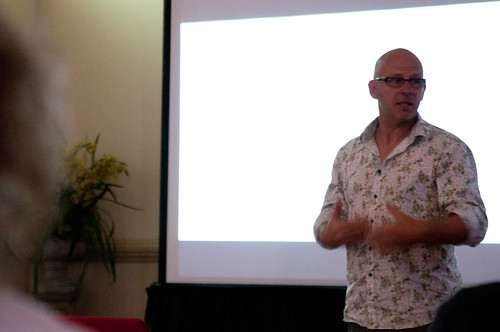
Johannes also covered the unexpected consequences of winning an award and what this can mean for your business.
What is Beauty?
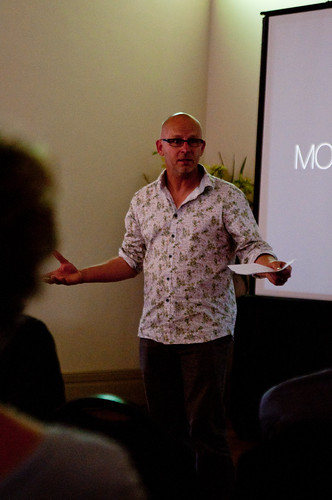 Similar to David's distinction between pretty images and strong images Johannes made the distinction between pretty images and beautiful images. Once again Johannes pointed out that a beautiful image did not need to contain a pretty subject (one could even go so far as to say it could contain an ugly subject) because beautiful and pretty were not the same thing. Johannes pointed to specific photographic examples to illustrate and clarify his point.
What is Ugliness?
Like beauty Johannes believes ugliness is not physical. He gave specific examples of where he believes it comes from and how you can address it when shooting.
Developing Your Own Style
While Style is an important selling point for any photography defining what style is can be difficult. While it is often spoken of as the way a photographer chooses to take photographs - covering everything from framing to equipment choices - Johannes, inspired by a talk by architect Daniel Libeskind, has come up with a few ideas opposing statements that may help pin this idea down. These included, but were not limited to
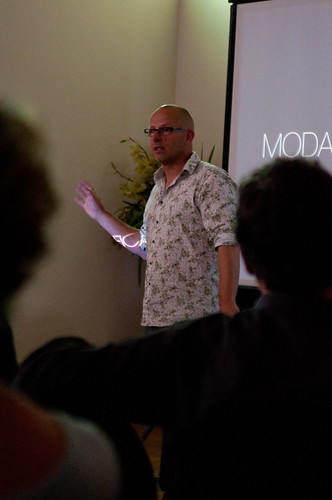
Emotion vs. Cool
Grace vs. Fashion
Love vs. Lust
Gen2.0 vs. Experience
While a few of these overlap the concepts that you value will influence the way you take photos and this will be part of what makes up your photographic style.
The Recession
The recession has amplified an environment that had always existed. It consists of people who buy services (Clients) and the types of services (Essentials, Treats, Postponables, Expendables). For most people photography does not fall into the essentials category so it is important to understand how clients might classify photography in order to understand where we should focus our efforts.
The way to survive
The good news is that the recession isn't all bad news. Tough times inspire creativity, efficiency, and forward momentum while decreasing competition. The trick is going to be in avoiding the temptation to cut spending on advertising (thus reducing exposure, awareness, and business) or to enter a price war in order to win business that may end up being unprofitable or detrimental to your brand image and prevent recovery.
Remember Your Clients - Another lesson from Architects and the return of the wine Bottle
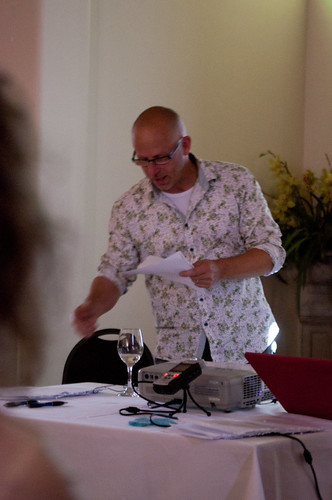
Ted's Words of Wisdom
Johannes made mention of videos from Ted a number of times and stressed the importance of their messages. They are included below for your viewing and listening pleasure. The Final tips and thoughts - things that didn't fit elsewhere - are included in the next section.
This video gave rise to the words section earlier
This video has guided Johannes reshaping of Moda Photographika after the earthquake. I have covered this video in a previous post and my thoughts can be read here.
Final tips and thoughts
Be up front about pricing
People look for prices when they look for a photographer. Don't hide yours away, be open and honest about them. They form part of your wine bottle.
Bonuses From the Internets
http://www.jvk.co.nzA Tonic For your Business - My notes
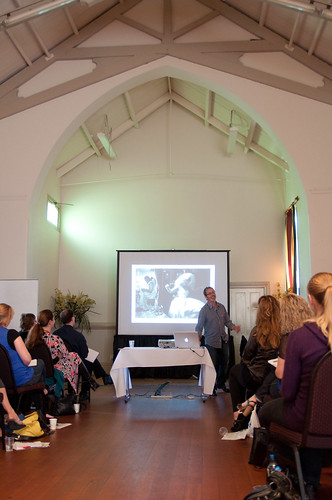
A Tonic was held by the NZIPP in association with Epson at the Jubilee Building in Parnell. It was intended to focus more on the business of photography than the practice of photography as suggested by its advertised title "A Tonic For Your Business".
The speakers were David Oliver and Johannes van Kan.
David intended to cover printing fine art, the classic portrait taken on location, quirky landscapes, and life after wedding photography.
Johannes intended to cover Working in the face of adversity, An important lesson on wine tasting, 10 great ideas I wish I had applied to my business but never got around to and The ugly truth about Brides.
Read about David Oliver's NZIPP A Tonic 2011 Presentation here
Read about Johannes van Kan's NZIPP A Tonic 2011 Presentation here
Read my views on Rhein II here.
The speakers were David Oliver and Johannes van Kan.
David intended to cover printing fine art, the classic portrait taken on location, quirky landscapes, and life after wedding photography.
Johannes intended to cover Working in the face of adversity, An important lesson on wine tasting, 10 great ideas I wish I had applied to my business but never got around to and The ugly truth about Brides.
Read about David Oliver's NZIPP A Tonic 2011 Presentation here
Read about Johannes van Kan's NZIPP A Tonic 2011 Presentation here
Read my views on Rhein II here.
Subscribe to:
Posts (Atom)