Looking for Patten Makers Photography? Just click the name and you will be transported accross!
Showing posts with label NZIPP. Show all posts

Tuesday, March 27, 2012

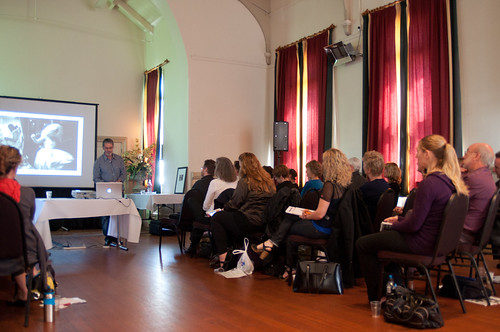
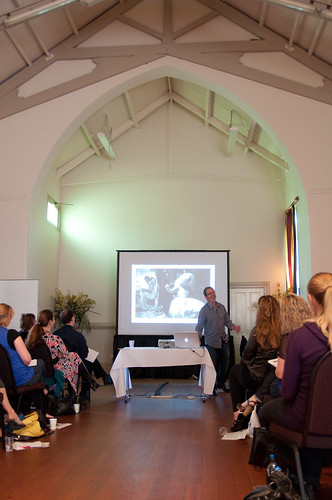
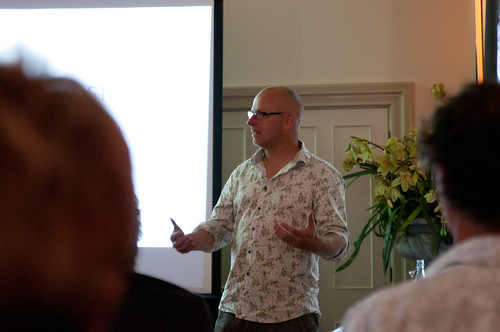
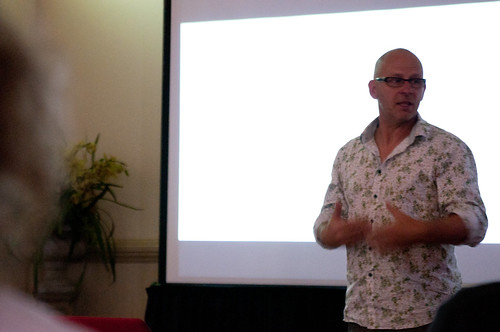
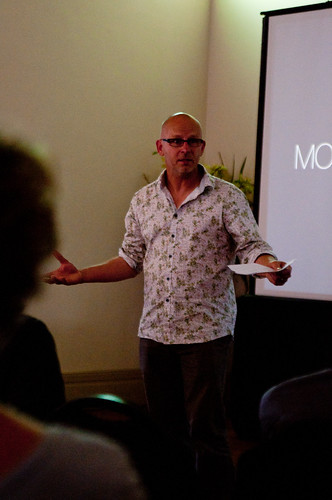
Mike Langford - Images for publication, Images that tell stories

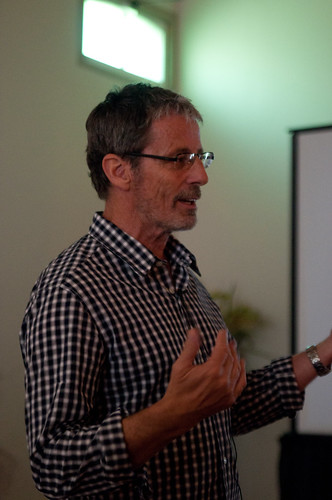
The great thing about hearing Mike Langford give a presentation isn't the fact that you are listening to an award winning photographer. It isn't that he is the president of the NZIPP. It isn't that he has been published an astounding number of times. It is that his words and images convery a genuine sense of wonder for the world we live in.

While it would be simple for the above approach and standing to lend Mike to being aloof or out of touch with photographers around him the opposite is the case. Despite his achievement and standing within the NZIPP he is alarmingly down to earth. Either through his leadership or through some shared belief this attitude to photographers is reflected in the NZIPP itself. It is an institution designed to lift all photographers up to a professional standard and it is one that aims to be all inclusive. It is about sharing knowledge, not about guarding it.

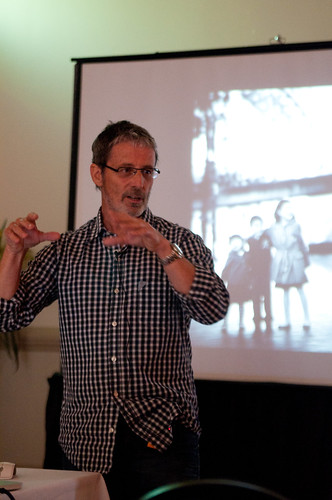
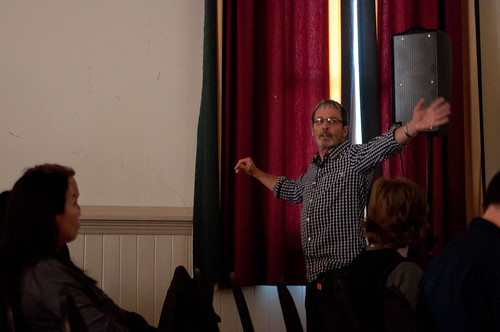
Indeed Mike's lecture itself was geared towards sharing knowledge. While the content was reasonably diverse - photographing for travel books, cook books, kids books, the Australian Geographic, and more - the message that Mike wanted to share was presented as an underlying theme: Photographs are about presenting ideas.

While this concept is unlikely to be new to many people what was interesting was the way in which he suggested ideas can be portrayed. While he did include elements related to composition he really focussed on understanding how images would eventually be used and the importance of making images say what you want, or need, them to say.

Composition is a key element of any photograph.. While Mike covered ideas that you would have heard elsewhere he stayed away from mentioning things like the rules of thirds or the golden spiral. Instead he chose to focus on the role of colour (warm colours project, cool colours recede), his preference for including items in the foreground when using a wide angle lens, and the way that a sentence can be used to structure a photograph.

The idea of a sentence providing structure to compositions reflects the idea that a photograph is intended to convey some sort of meaning or idea. In terms of visual communication things that are in the foreground tend to be seen first. As such the equivalent sentence would typically start with the foreground item before moving back into the picture. For example a sentence structured as "A fisherman and his lobster boat in Costa Rica" would have a fisherman in the foreground with something in the midground showing that his boat is a lobster boat. Preferably this shot would also have Costa Rica in the background.

Good compositions must also consider how the final image will be presented. If it is a magazine or book cover it needs to provide space for the title. If there  is a gutter that will cut the image this needs to be considered. If it will wrap around the book, filling the front and back covers this should also be considered, perhaps through the inclusion of a surprising element on the back cover. Importantly though it is not simply the page on which the image will appear that should be considered. It's position relative to the rest of the images in the book should also be considered. If a rhythm is formed it should be followed.

Yet while these subcomponents are important they are pointless if the image itself has nothing to say. Great images, equated to award winning images by Mike, are those that show people something different. They are images that make the viewer stop and ask questions of the image, the subject, or something larger. Great images tell a story that comes from the photographer. Critically great images may not ever occur without the intervention of a photographer.

At this point those of a more photojournalistic bent may recoil from this definition of great imagery. How can an image be great if it is dishonest? Simple. Photographs illustrate ideas. In many cases, once you know what the idea is, it becomes clear that the image will tell a better, more accurate story if you as the photographer intervene. This intervention may be in the form of directing light to points of interest or it may be in the form of moving objects in, out, or around the frame. Such intervention can help tell the intended story more directly to the viewer. One could even argue that the intervention makes the image MORE honest rather than less through providing a clearer illustration of the truth of the idea. An example Mike gave was a shot where a harvester was working in a wheat field. In order to clearly show what the harvester was working on Mike gaffer taped some of the wheat to his tripod, lifting it above the rest of the crop and clearly showing the grains. This dishonest lifted wheat made the story in the photograph come through more clearly, in essence making the image speak the truth about what was happening with a louder voice.

Overall the talk was well worth the trip to Parnell. Not only were great tips about photography shared, the notion of what it means to be an NZIPP member was brought into focus. For those that are still reading I don't mind you knowing that, as a result of attending this talk, I intend to join in the near future.

Wednesday, November 16, 2011

A Tonic For Your Business - Rhein II

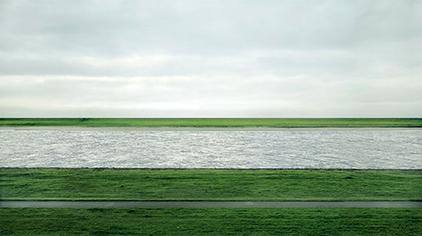
At the end of the day's talks attention turned from business to art photography with the photographers taking aim at one image in particular. Rhein II. While I had to dash off it seemed as though the image was about to suffer through a frosty and hostile reception. One that is not, to my mind, entirely justified. In fact it is my opinion that image is probably worth its price tag but that the reasons for this are less about the photograph itself and more about what it means to the buyer.
The image above is the most expensive photograph ever sold, coming in at a cool $4.3 million USD (2.7 million pounds at the time). The photographers were quick to criticise - suggesting the print was of poor quality and would soon fade - asking whether or not it would meet their professional standard requirements - declaring that there was nothing special about it and that anyone could have taken it. Unfortunately none of these things are the point.

In fact those calling for the metaphorical blood of the image had failed to grasp a message that they had heard just moments ago in a video of Simon Sinek. They were all focussing on what the image was and how it had been produced rather than considering why it existed in the first place. 

Critically I am not pointing this out as a failure of the wedding and portrait photographers in the room. In their world the issues of how and what are of the utmost importance with the why often being reduceable to capturing a moment, a likeness, an event and so on. As wedding and portrait photographers that is their job, their reality. The failure comes from looking at the image as themselves and expected it to be judged by their standards. They expect and require the image to be able to stand on its own.

In the art world however works do not stand on their own. They stand in the context of all that has come before, all that will come after, and all that was occuring at the same time. On top of this they are accompanied by the interpretation of the artist, critics, and viewers. Art is free to take on a meaning beyond itself - in so doing it becomes more than itself.

Yet art is only part of what makes up the price of the image. The dirty old market also plays a role. As the photograph was auctioned this meant that it was worth what anyone was prepared to pay for it. In fact, more precisely, it is worth slightly more than the amount that the person who wants and/or is able to pay second-most is prepared to pay for it. As such we might well assume that the image may be worth more than $4.7 million. But what drove the winner of the auction to pay that amount for it?

The first thing we might consider is that they liked the photograph for its importance as a piece of art - its extrinsic context and the meaning that people had imposed on it. While that's nice it probably doesn't do much in terms of setting a price. What we need next is some kind of an expectation about what a fair price might be. This can be informed by previous art purchases, previous records, and any number of other things - interestingly what we see here is the influence of context once again. Finally with the picture now having permission to be worth anything the auction contributes to the final price - with each successive bid the price that the item is permitted to have increases. With each successive bid someone takes ownership away from the previous bidder. With each successive bid a person who owned the item has had it taken away and is tempted to take it back for just that little bit more. Arguably the auction process may drift from the objective value of the photograph toward the emotional value of the pride of the bidder.

A combination of these factors (and certainly more) are what make the image 'worth' the money to the person who buys it. It is not so much what the image is that matters but what the image means that matters. While this may begin with some sort of artistic meaning it probably ends up with more of an emotional meaning. The owning of the image becomes more important than the image itself.

So, is the photo worth the price that was paid for it? On it's own probably not - but that is not relevant. This auction and this photograph were never about the combination of ink and paper. They were both always about something more.

This may have been where the group ended up as well. Again I don't know, I had to leave early.


A Tonic For your Business - David Oliver

What Follows is a combination of my notes, memory, and opinions from A Tonic 2011 - Some things may be inaccurate, misleading, or even missing - please feel free to point out any errors out or add your own voice in the comments section below.

David Oliver opened by reminding everyone of the importance of looking back on the great photographers who have gone before. Afterall without knowing where things have come from how can you know where you are going or even where you are? In particular he spent time pointing to
David Moore
Graham McCarter
Lewis Morely
He also talked about his own experience of working around other photographers and being open to the feedback that they provide. While he did mention feedback from mentors who he still seeks advice from one particular piece of feedback seemed to have stuck in his mind - a comment from an unnamed advertising photographer in a studio he used to work for:


"When are you going to show me a strong image?"


This comment, challenge, question, whatever you want to call it, seemed to serve as a springboard. While at the time he felt that his images were strong he later realised that a strong image is something that is truly special. In fact he suggests that he has only a handful of strong images from his photography career to date (one such image being the Balmoral). This lead to one of the key messages of his presentation


We are our images


Now, you might expect this to be fairly obvious to photographers who are employed by people to take photos or are paid for the photos that they take. However in a world full of marketing madness where style (spin) is often emphasised over substance (the product/images) it can be a surprisingly easy point to lose track of. In fact it has very important implications for us.

Strong images tell people who we are
Strong images tell people a lot about our particular style. Importantly while clients may not neccesarily hire us to produce a strong image (they are more likely to hire us to produce nice or pretty images) strong images may be what brought them to us. importantly strong images can be ugly and identifying the difference between pretty images and strong images is an important exercise for any photographer. For me strong images have a power to create a strong emotion, desire, or drive within the viewer. Ideally a strong image will have this effect on any viewer, in some cases however it is necessary for the viewer to understand the context or story surrounding the image for this power to manifest. David gave an example of a wedding image which - in itself - was pretty but not powerful. However when paired with its backstory of extraordinary loss the picture came to show a form of strength/determination in the face of adversity that gave the image enormous emotional strength. Was this image strong? Not by itself - a point that he would revisit later.


Individual images can last a lifetime and keep bringing you work
Self explanatory :)


Charity projects can give us exposure
Charity projects raise awareness of causes and the photographers who shoot them. While you may not gain financially you do gain experience, understanding, and perspective.


Presentation matters
If we are our images it makes sense to present our images in the best way that we can. Presentation on quality product - such as fibre-based/fine-art papers with Ultra Chrome ink - ensures that the images will last and provides an opportunity for split price points with increased profits. In fact presentation on these sorts of products can allow an image to be placed in sunlight for 6 years (maybe more) with no visible degradation in colour quality. Lab (Resin Coated (RC)) prints on the other hand would be lucky to last 3 years in the same conditions. In the shade RC prints can be expected to last 20 years or so while Ultra Chrom prints should last 100 years or more. To get equivalent performance from an RC print it would need to be kept in an album. Finally beware of what you put in front of your images. Glass can give images a green cast while perspex should not.


We capture luck


Yet with these points in mind a lot of what we do comes down to luck. Being in the right place at the right time with the right equipment to get the right shot. 2 examples of this were given. 1 involved the capturing of a strong photograph, the other an example of an iconic photograph. Yes, there is a difference.


Luck and a strong photograph
The Balmoral - One of David's strong images - almost didn't happen. It was taken during a family portrait session with a spare frame on the end of a roll of film. David turned around, saw what he liked, and took the shot. While a number of people have tried to replicate the shot they have not been able to - this is because the shot is the result of a combination of factors that occurred by chance rather than design. In particular the presence of the mist in the photo - an event that is very uncommon in that area. This photograph was a product of being in the right place, at the right time, with the right equipment. As such it is a strong argument for always having your camera with you.


Luck and an iconic image
Lewis Moorely took a nude photo of a prostitute - Christine Keeler - in the 1960s. The image was good but probably wouldn't have been strong enough to sell to your average punter on its own. However later it emerged that the prostitute's clients included KGB agents and a British minister. Lewis had the only nude shot and the image was printed everywhere. Through a little bit of luck the image had become iconic.


David's Keys To Survival


David's studio survived the crash of the 1980s and is in a good position to survive the current crash. How has he done this? The simplest summary of his answer is that he has achieved this by focussing on his clients.


No pressure selling
David has avoided the advice of marketing gurus on the understanding that marketing gurus make money by selling ideas to photographers rather than selling photos to clients. If they have no experience doing what he does why should he listen to their advice? Rather than pressure clients into making purchases by threatening them with the deletion of files or sudden price spikes he leaves the clients along with printed 3x2 proofs and a pricelist. David then wanders off allowing them time to make their decision.


Focussing on quality products
David also focuses on quality products. Arguably this focus reduces the need for further salesmanship on his behalf as clients can have faith in the fact that if they purchase something it will be worth the money that they are spending on it. This even extends to the sales session - he provides prints on paper as projected images are of a reduced quality.


Focussing on what the client wants
David takes the time to understand what his clients want. He treats people as people rather than numbers being churned through a system. This makes people feel valued, ensures that they are happy with the work and leads into the next point.


Repeat Business and Referrals
All of this together has lead to repeat business and referrals.


Inspiration
Staying inspired is key. As photographers we are in a position where there is always more to be learnt - there will always be new things to look at and new ways of looking at them. This links back to the beginning - the benefit of looking back on the work of great photographers who have come before - but also links us to the present and the future. Look around you to see what other people are viewing and seeing. If you find a photograph that you like - buy it and frame it. It will become an investment - if it not a financial investment an investment in your continued inspiration.


Critically none of this has been tested scientifically. While he has received positive feedback from people who have implemented similar systems it is entirely possible that the change may be acting as something of a placebo. I implemented a change that I expect to work in such a way, therefore the change does work in such a way regardless of what the change actually is.


Final Tips and Thoughts

David also dropped a number of tips that don't fit easily into the sections above. These included:


SunCalc
SunCalc is a web based app tied to google maps. It predicts the position of the sun and lays the information over a map of the area you intend to shoot in.

Wear a White shirt
This will provide a little bit of bounce and may give you some catch lights in your subject's eyes.

Avoid Flash
Flash kills faces.

Use your camera bag to secure your reflector
This provides an alternative to flash and can work quite well to fill in people's faces.

Film shooting was theatre
A key advantage of digital photography is the ability to take an endless number of shots with very little hassle. While this often leads to hell in the editing phase it has made also made the shoot itself less theatrical. Without the limitation of a roll or 2 of film there is no longer a need to pretend to adjust the lights in order to warm up a subject. While this does perhaps lead to a more honest version of photography does it also mean that something has been lost? Do we take less care in taking our images? Do our subjects feel that are getting less value through reduced fiddling?


Get the Film Look Back with Nik Software
David loves the look that film grain and papers gave photographs.  Nik software and Silverefex allow him to bring that look with him in the digital era. If you're also a fan of the film look give them a go and let us know your thoughts.


Bonuses from the Internets


A Tonic For Your Business- Johannes van Kan


What follows is a combination of my notes, memory, and opinions from A Tonic 2011 - Some things may be inaccurate, misleading, or even missing - please feel free to point out any errors out or add your own voice in the comments section below. Critically this is a reduced version of what was presented. Any of Johannes unique content has been presented in brief only to acknowledge the time spent preparing the material and the value that can be obtained from future presentations.


Some points that were covered but are not covered here include:
The importance of story
Detailed coverage and examples of how packaging signals value
The unexpected consequences of winning awards
The ugly truth about brides
Removing Ugliness
Johannes  full list and definition of his style defining terms
Detail around the types of clients you will encounter in a recessionary environment and how to market to them
Johannes solution to the architect/photographer search (what's important in photographers/architects)
Detail of how to recover from a setback like an earthquake
Photographic examples used to illustrate points


If any of the above are likely to be helpful you may like to attend a future event or hire him as a speaker for an event you may be planning.

Johannes van Kan talk was media rich and heavily influenced by the impact that the Christchurch earthquake had on his business. While he stopped short of wishing an earthquake on everyone in the room he did suggest that it was an experience that could be beneficial to consider when planning your business. That being said things started on a lighter note with a wine tasting and viewing.

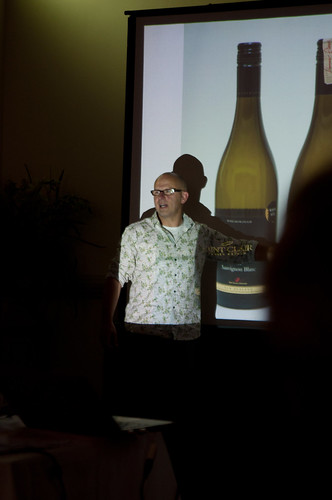
We Buy the Bottle, Not the Wine

The talk began with the room being split into two groups. One group were taken outside and shown 3 bottles of wine. the other group stayed inside and were given three glasses of wine. Both groups rated the expected price of each wine. The bottle group made their judgements solely based on the way the bottles looked. The wine glass group made their judgements based on the taste of the 3 wines. Differences in the expected prices unveiled some important lessons.

Bottle Viewers Gave Higher Prices than Wine Tasters
This is important because it shows the difference between having packaging and not having packaging. In this case any packaging was better than no packaging.

Only Bottle Viewers Could Reliably Differentiate the Wines
There are a few important points here. First is the fact that the packaging is more effective at signally how much something should be worth than the product itself. Second is the fact that most people were unable to tell the difference between the expensive and cheap wine. Why not? Participants were not experts - without knowing how to tell if the wine was good or bad people were unable to. This is directly relevant to photography. Most of our clients don't know what separates a good photo from a great photo. If we are sellling great photos we need to tell them (or, somewhat more deceptively, if we're selling good photos we can tell them our photos are great and they will believe us).

The take home message. Beware of the way you present yourself. What is your story? This, rather than your images, is what people will buy.

Awards - Are They Worthwhile?

Tying in nicely to this are the idea of awards. While awards can be expensive to enter they can also be beneficial. They bring clients a sense of reassurance in your quality and can also provide media exposure. However in order for them to be beneficial you must tell people about them, you must put them on your wine label.

Johannes also covered the unexpected consequences of winning an award and what this can mean for your business.

What is Beauty?

Similar to David's distinction between pretty images and strong images Johannes made the distinction between pretty images and beautiful images. Once again Johannes pointed out that a beautiful image did not need to contain a pretty subject (one could even go so far as to say it could contain an ugly subject) because beautiful and pretty were not the same thing. Johannes pointed to specific photographic examples to illustrate and clarify his point.

What is Ugliness?

Like beauty Johannes believes ugliness is not physical. He gave specific examples of where he believes it comes from and how you can address it when shooting.


Developing Your Own Style

While Style is an important selling point for any photography defining what style is can be difficult. While it is often spoken of as the way a photographer chooses to take photographs - covering everything from framing to equipment choices - Johannes, inspired by a talk by architect Daniel Libeskind, has come up with a few ideas opposing statements that may help pin this idea down. These included, but were not limited to


Emotion vs. Cool
Grace vs. Fashion
Love vs. Lust
Gen2.0 vs. Experience

While a few of these overlap the concepts that you value will influence the way you take photos and this will be part of what makes up your photographic style.

The Recession

The Environment
The recession has amplified an environment that had always existed. It consists of people who buy services (Clients) and the types of services (Essentials, Treats, Postponables, Expendables). For most people photography does not fall into the essentials category so it is important to understand how clients might classify photography in order to understand where we should focus our efforts.

The way to survive
The good news is that the recession isn't all bad news. Tough times inspire creativity, efficiency, and forward momentum while decreasing competition. The trick is going to be in avoiding the temptation to cut spending on advertising (thus reducing exposure, awareness, and business) or to enter a price war in order to win business that may end up being unprofitable or detrimental to your brand image and prevent recovery.


Remember Your Clients - Another lesson from Architects and the return of the wine Bottle

As previously mentioned Johannes business was hit hard by the earthquake. Their building was torn down and they needed to rebuild. This brought on the need for an architect which brought on the search. During this search Johannes was struck by the similarity between hiring an architect and hiring a photographer. Both professions are of an artistic nature, both involve a number of clues to who to choose and both sets of professionals are usually hired by people who know little about the industry. He outline the types of architects they met and the reasons why they did and didn't choose them. Ultimately this provides a great exercise for anyone to indulge in. Find something of an artistic nature that you know little about and attempt to hire the best candidate. What do you prioritise and why?


Ted's Words of Wisdom

Johannes made mention of videos from Ted a number of times and stressed the importance of their messages. They are included below for your viewing and listening pleasure. The Final tips and thoughts - things that didn't fit elsewhere - are included in the next section.

This video gave rise to the words section earlier

This video has guided Johannes reshaping of Moda Photographika after the earthquake. I have covered this video in a previous post and my thoughts can be read here.


Final tips and thoughts

Be up front about pricing
People look for prices when they look for a photographer. Don't hide yours away, be open and honest about them. They form part of your wine bottle.


Bonuses From the Internets
http://www.jvk.co.nz


A Tonic For your Business - My notes

A Tonic was held by the NZIPP in association with Epson at the Jubilee Building in Parnell. It was intended to focus more on the business of photography than the practice of photography as suggested by its advertised title "A Tonic For Your Business".


The speakers were David Oliver and Johannes van Kan.
David intended to cover printing fine art, the classic portrait taken on location, quirky landscapes, and life after wedding photography.
Johannes intended to cover Working in the face of adversity, An important lesson on wine tasting, 10 great ideas I wish I had applied to my business but never got around to and The ugly truth about Brides.


Read about David Oliver's  NZIPP A Tonic 2011 Presentation here
Read about Johannes van Kan's NZIPP A Tonic 2011 Presentation here
Read my views on Rhein II here.